Why thermoplastics? No rust, no corrosion, no exposed metal.
Thermoplastics, like polypropylene, provide high corrosion resistance and optimal durability. Thermoplastics also allow for unique fabrication methods to lessen the potential for gaps or open joints such as hot-gas welded seams, v-grooved 90° angle bends, all while maintaining structural integrity.
ISIMONA AMERICA Industries manufactures a diverse range of chemical and corrosion resistant thermoplastic materials that service the chemical containment and processing industries. These materials meet non-metallic flammability and chemical resistance requirements for NFPA 45.
Typical laminar flow hood enclosures are fabricated from stainless steel, designed to protect semiconductor wafers, biological samples, or particulates, by exhausting airflow in a consistent direction. Traditional materials like stainless steel could allow gaps or open joints, allowing spores to collect and grow.
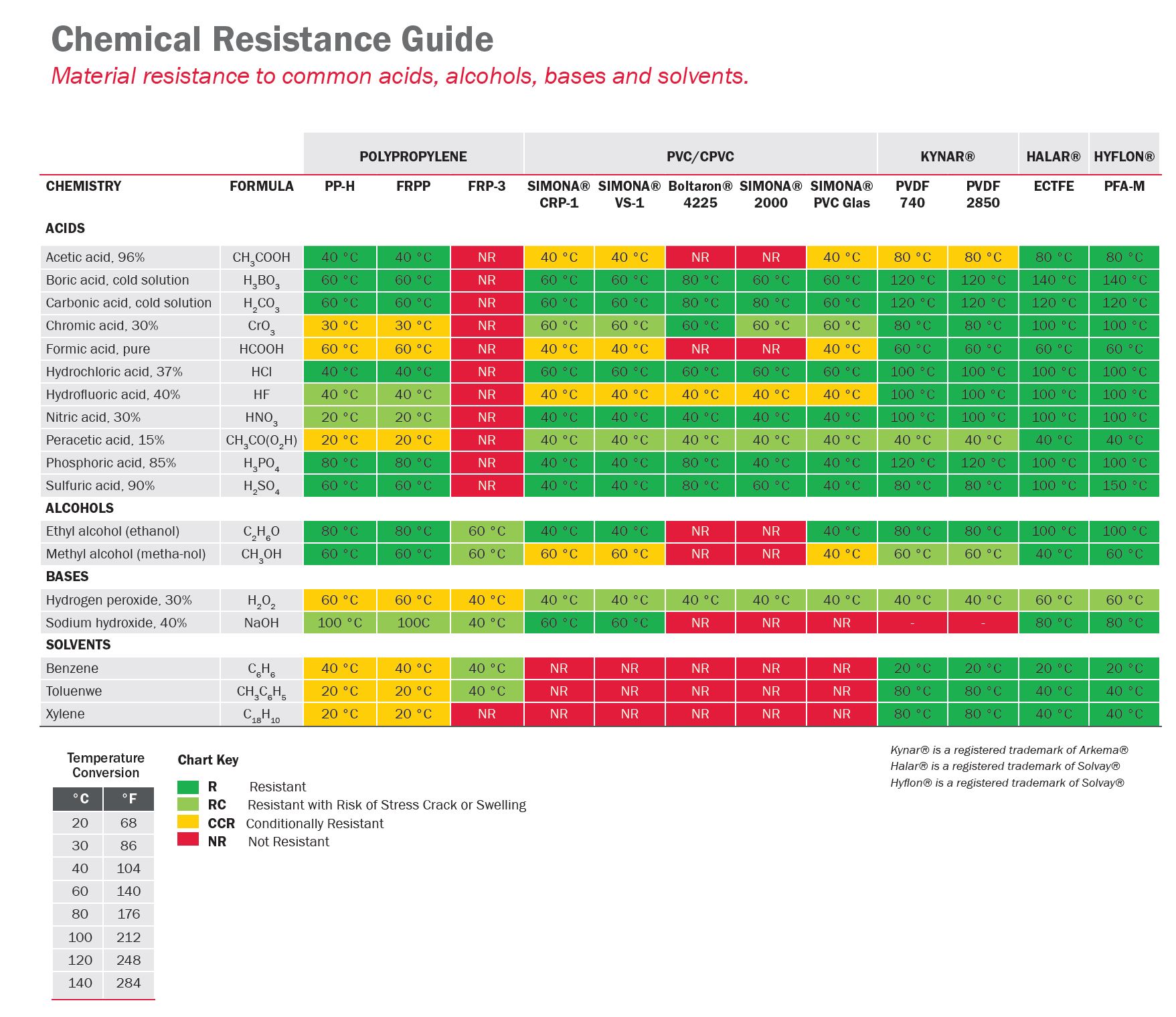
SIMONA AMERICA Industries offers multiple polypropylene, PVC and fluoropolymer solutions to better service this industry.
Materials
- Polypropylene
- PP-H (Homopolymer)
- FRPP (UL 94 V-0)
- FRP-3 (FM 4910)
- PVC/CPVC
- SIMONA® CRP-1 (PVC)
- SIMONA® VS-1 (PVC)
- SIMONA® PVC Glas (PVC)
- Boltaron® 4225 (CPVC)
- SIMONA® 2000 (Clear CPVC)
- Fluoropolymers
- PVDF (Kynar®)
- ECTFE (Halar®)
- PFA-M (Hyflon®)
Applications
- Fume hoods (VAV, CV)
- Laminar flow workstations
- Wet process stations
- Cabinets, casework, tables
| Material | Description | UL 94 |
FM 4910 |
ASTM E 84 |
Service Temperature |
Heat Deflection Temperature |
|---|---|---|---|---|---|---|
| Polypropylene | ||||||
| PP-H | Homopolymer | HB | No | No3 | 32 to 212 °F | 210 °F @66psi |
| FRPP | Homopolymer | V-0 | No | No3 | -4 to 180 °F | 180 °F @66psi |
| FRP-3 | Copolymer | V-0 | Yes | Yes2 | 32 to 200 °F | 162 °F @66psi |
| PVC/CPVC | ||||||
| SIMONA® CRP-1 | PVC Type I | V-0 | Yes | Yes2 | 32 to 162 °F | 162 °F @264psi |
| SIMONA® VS-1 | PVC Type I | V-0 | Yes | Yes2 | 32 to 140 °F | — |
| Boltaron® 4225 | CPVC | V-0 | Yes | Yes | 32 to 200 °F | 205 °F @264psi |
| SIMONA® 2000 | CPVC | V-0 | Yes | Yes | 32 to 195 °F | 180 °F @264psi |
| SIMONA® PVC Glas | PVC Type I | V-0 | No | No | 32 to 140 °F | — |
| Fluoropolymers | ||||||
| PVDF 740 | Kynar® PVDF | V-0 | Yes | N/A | 14 to 280 °F | 244 °F @264psi |
| PVDF-C 2850 | Kynar® PVDF | V-0 | Yes | N/A | -4 to 265 °F | 120 °F @264psi |
| ECTFE | Halar® | V-0 | Yes | N/A | -40 to 302 °F | — |
| PFA-M | Hyflon® | V-0 | Yes1 | N/A | -328 to 425 °F | — |
1 Accepted by FM as fully fluorinated material meeting FM 4910; no listing required.
2 Material tested in accordance with ASTM E 84, Class A (flame spread of 25 or less, smoke generation of 450 or less).
3 Sprinklers may be used to satisfy ASTM E 84.
Flammability
- FM 4910 is an industry requirement for evaluation of materials used in cleanroom occupancies. This stringent test accounts for material service temp while in use.
- UL 94, the Standard for Safety of Flammability of Plastic Materials for Parts in Devices and Appliances testing, is a plastics flammability standard released by Underwriters Laboratories of the United States.
- ASTM E 84 is a 10 minute fire test response method for surface burning characteristics of building materials.